


Why Can't Excavator Manufacturers Agree on One Attachment Mount?
Posted by Nate Hagen on 28th Nov 2026
Why Can't Excavator Manufacturers Agree on One Attachment Mount?
You own a 5-ton excavator. Your buddy owns a 5-ton excavator.
You've both got buckets, hydraulic thumbs, augers, and other attachments.
So naturally, you should be able to swap attachments between the two machines, right?
Well, not so fast!
One machine has different pin diameters. The other has different pin spacing. Then there's ear width, quick couplers, wedge-style mounts, and whatever mounting system came with the machine.
And suddenly, that attachment that looked like a perfect fit is sitting on the ground while you're scratching your head trying to figure out why it won't connect.
Sound familiar?
We've got manufacturers like Caterpillar, Bobcat, John Deere, Kubota, Takeuchi, Yanmar, Komatsu, CASE, Volvo, and plenty more producing incredible excavators.
But when it comes to attachment mounting systems, things can get complicated pretty quickly.
So why can't everyone just agree on one mounting system?
Let's dig into what's different, why those differences exist, and how to make sure the next attachment you purchase actually fits your excavator.
1. Why Are Excavator Mounts So Different?
First, let's give the manufacturers a little credit.
Excavators aren't all built the same.
Machines vary in size, breakout force, bucket geometry, hydraulic capabilities, and the loads their attachments need to handle.
A compact 2-ton excavator simply doesn't have the same requirements as a 20-ton machine.
So naturally, some variation in mounting systems makes sense.
But here's where things get frustrating.
Even excavators in the same weight class can use completely different mounting configurations.
And it's not always because they're different brands!
Depending on the machine's model, year, and installed coupler, two excavators from the same manufacturer may have different attachment requirements.
The problem isn't necessarily that manufacturers are doing something wrong.
It's that the industry has developed multiple mounting solutions over time, and compatibility between them isn't always straightforward.
I think there's plenty of room for improvement.
2. The Three Measurements Every Excavator Owner Should Know
Before we get into all the different mounting systems, let's talk about something every excavator owner should understand.
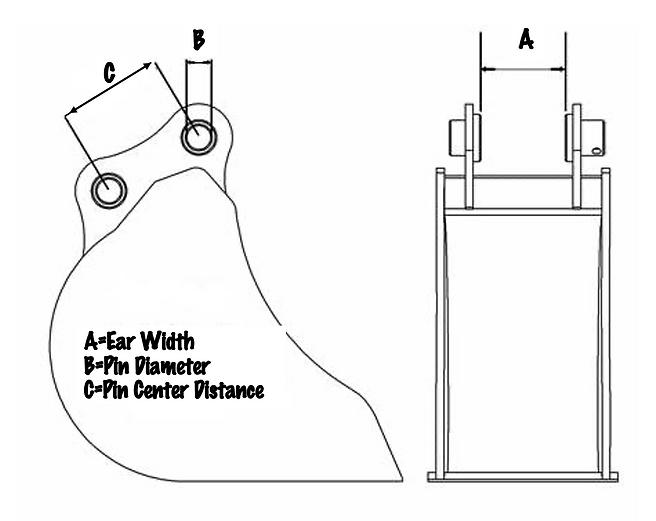
If you're purchasing a pin-on attachment or a compatible pin-grabber attachment, there are several measurements that can determine whether it fits.
And no, simply telling someone you have a 5-ton excavator isn't always enough.
Pin Diameter
This is the diameter of the steel pins connecting the attachment to the excavator or coupler.
Different excavators can use different pin sizes, even in similar weight classes.
Some setups also use different diameters at the two pin positions.
Pin Center-to-Center Distance
This is the distance between the centers of the two mounting pins.
Two attachments might have identical pin diameters but different center-to-center spacing.
And that can be enough to prevent a proper fit.
Inside Ear Width
The mounting ears are the brackets on the attachment that accommodate the excavator's stick, linkage, or coupler.
If that opening is too narrow, the attachment may not fit.
If it's too wide, the setup may require approved spacers or other manufacturer-specified components.
Don't Forget the Coupler
Here's something important.
Even if your pin dimensions look correct, the attachment still needs to match the actual mounting system installed on your machine.
A dedicated quick coupler may have entirely different requirements from a traditional pin-on setup.
Our advice: Know your machine's make, model, serial number, coupler type, and mounting dimensions before ordering an attachment.
And when in doubt, reach out to an attachment specialist. A few measurements and photos can save everyone a lot of headaches.
3. Pin-On, Pin Grabber, Wedge-Style, and S-Type: What's the Difference?
Here's where things get interesting.
There isn't just one type of excavator mounting system. There are several approaches, and each has its advantages.
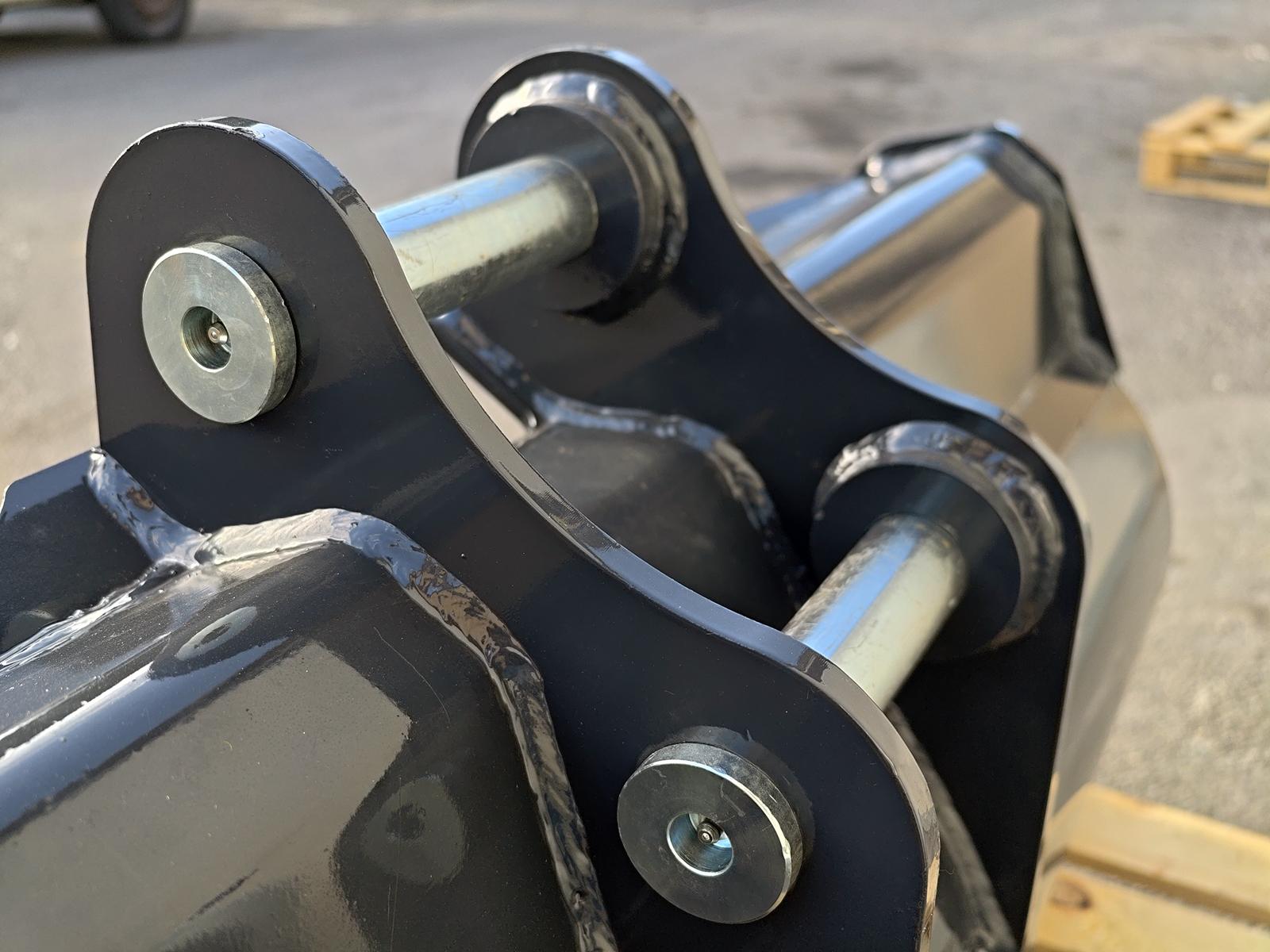
Traditional Pin-On Mounts
This is the classic setup.
The attachment connects directly to the excavator's stick and linkage using mounting pins.
It's a relatively simple system that can provide a compact connection without adding a separate quick coupler.
The downside?
Changing attachments can involve removing and reinstalling pins, which isn't always the fastest or most convenient process.
If you're running one bucket most of the day, that might not bother you.
But if you're constantly switching between a bucket, breaker, auger, and other attachments, those changes can eat into your productivity.
Pin-Grabber Quick Couplers
Pin grabbers are popular because they allow operators to change compatible attachments much more quickly.
Instead of removing the attachment's mounting pins every time, the coupler engages the pins.
Depending on the design, some pin grabbers accommodate a range of pin spacing and certain pin configurations.
Companies like Geith and other coupler manufacturers offer systems designed around this concept.
But here's the catch:
Pin grabber doesn't mean universal.
Pin diameters, spacing, widths, locking mechanisms, and approved attachment configurations still need to match.
Dedicated and Wedge-Style Mounting Systems
Now we get into systems designed around particular mounting interfaces.
For example, Bobcat offers its X-Change mounting system on compatible compact excavators.
There are also dedicated wedge-lock and hook-style mounting systems used across different excavators and aftermarket equipment.
These systems can make changing attachments convenient and provide a secure, repeatable connection when properly matched.
But an attachment made for one system won't automatically fit another.
You may need a compatible mounting bracket, adapter, or different attachment configuration.
And when you're shopping online, it's important to know exactly what your machine has installed.
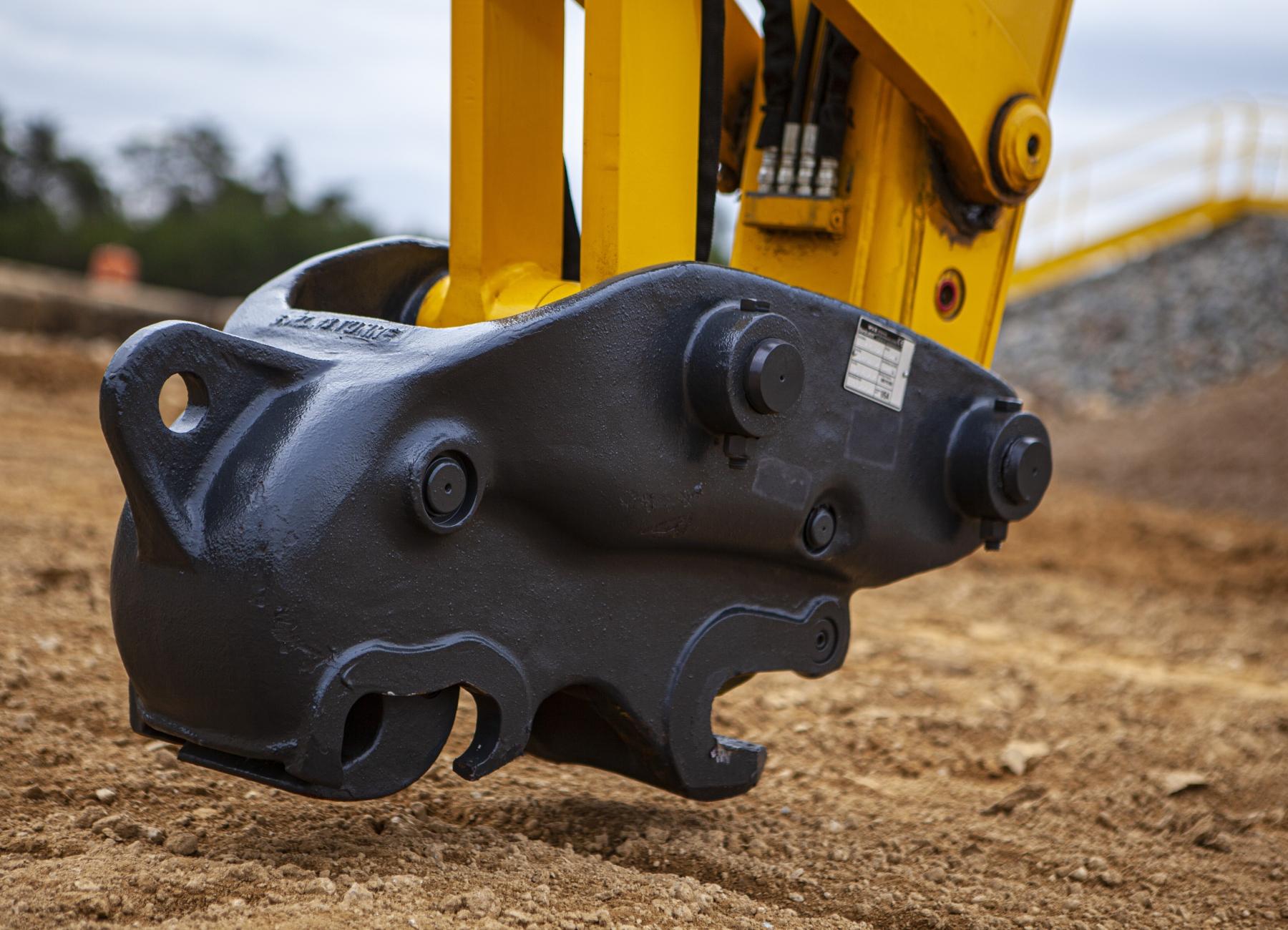
S-Type and Symmetrical Quick Couplers
Here's a mounting approach I think deserves more attention.
S-type couplers use a symmetrical mounting interface, with standardized sizes such as S40, S45, S50, S60, and others.
They're especially established in parts of Europe and have gained interest elsewhere.
Companies like Steelwrist and Rototilt have been major supporters of greater compatibility through standardized excavator interfaces.
The benefit is that properly matched couplers and attachments from different manufacturers can use the same interface.
However, S-type isn't one single mount size for every excavator. The specific size and configuration still matter.
And that's an important distinction: We don't necessarily need one physical mount for every machine. We need more consistency within the appropriate machine and attachment classes.
4. So What Are the Different Manufacturers Doing?
Let's look at some of the brands operators commonly encounter.
Bobcat offers systems including X-Change and pin-grabber options on compatible excavators.
Caterpillar offers multiple coupler families, including pin grabbers, S-type couplers, and CW-style systems.
Other manufacturers, including John Deere, Kubota, Takeuchi, Yanmar, Komatsu, CASE, and Volvo, have machines that may use direct pin-on configurations, factory quick couplers, or aftermarket systems.
And that's an important point.
The name on the side of the excavator doesn't always tell you which mount is installed.
Someone might have a Kubota with a factory coupler, while another Kubota owner has an aftermarket pin grabber.
A contractor might operate several excavators from the same manufacturer but use different mounting systems across the fleet.
This is why it's so important to identify the actual setup rather than assume that an attachment will fit based on the machine brand alone.
5. Are Universal Excavator Mounts Finally Getting Better?
Thankfully, manufacturers are developing some interesting solutions to these problems.
And here's one I think is worth highlighting.
Eterra Universal Excavator Mount
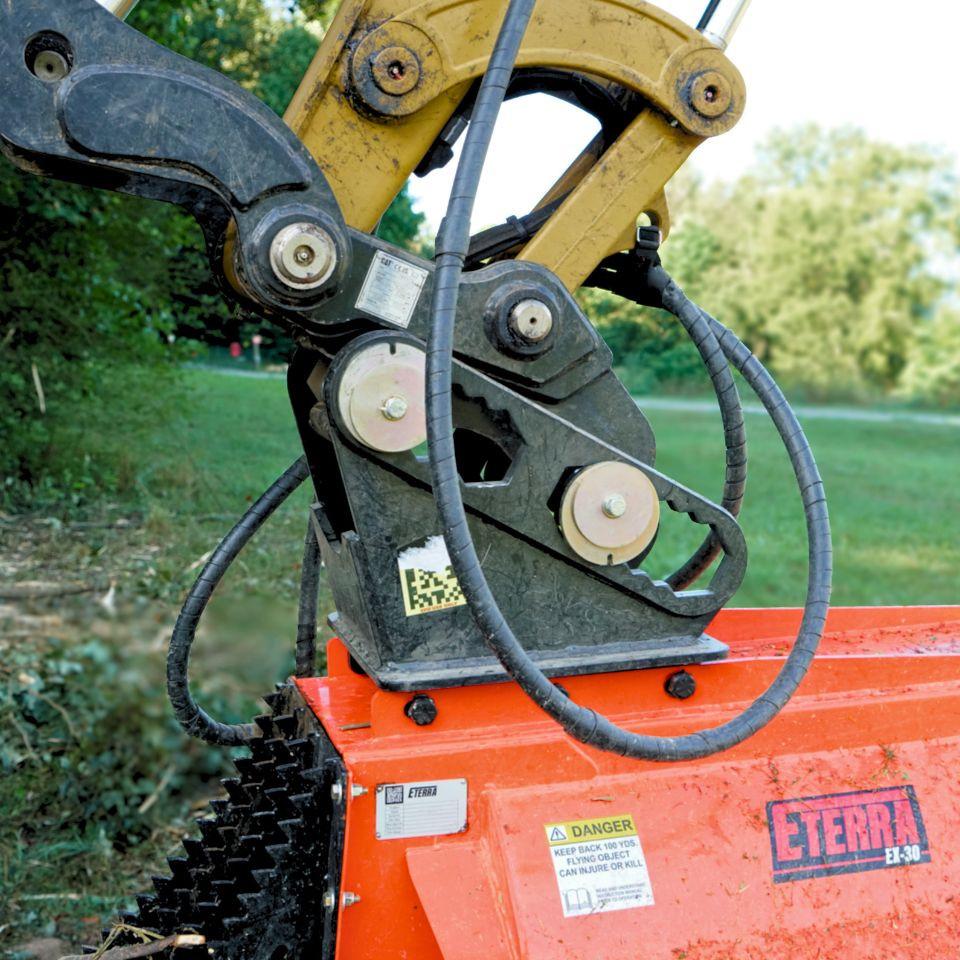
Eterra has developed a universal excavator mounting system designed to help operators use compatible attachments across a wider range of excavators.
Instead of having to purchase a completely different mounting arrangement for every situation, the system uses interchangeable pin kits, adjustable collars, and spacers to accommodate specified configurations.
The Eterra system offers pin sizes from 30 mm to 50 mm in 5 mm increments.
It's also designed to work with Eterra's compatible Universal Rail System attachments.
That creates an interesting opportunity for operators who want to use multiple attachments, such as post drivers and flail mowers, through a common rail interface.
But let's be clear.
Universal doesn't mean it fits absolutely everything.
You still need to verify pin dimensions, coupler compatibility, machine capacity, hydraulic requirements, and the specific attachment.
That's why we recommend discussing your setup before ordering.
You can learn more about the Eterra Universal Excavator Mount at Skid Steer Solutions.
What About Open-S?
There's another development worth watching.
The Open-S initiative is working to improve compatibility between fully automatic excavator quick couplers, tiltrotators, and attachments from different manufacturers.
It's based on the established symmetrical S-type mounting concept and aims to provide common interfaces.
Steelwrist and Rototilt helped establish the initiative, and other manufacturers have joined the effort.
Kubota has also announced support for Open-S in Europe.
That's encouraging!
It shows that some equipment manufacturers recognize the value of making attachments and mounting systems more interchangeable.
It doesn't mean that every existing excavator or attachment is suddenly compatible.
But it's a step toward more standardized equipment.
And personally, I'd love to see more of it.
6. Why Does Attachment Compatibility Matter So Much?
Let's say you're a contractor running a mini excavator.
Maybe you started with a digging bucket and a hydraulic thumb.
Now you're looking at adding an auger for fence installation, a brush cutter for vegetation management, or a hydraulic breaker for demolition work.
Suddenly, your excavator can take on several different types of projects.
That's one of the things I love about today's compact equipment.
The machine is only part of the equation. The attachments are what can open up entirely new opportunities.
But there are a few things worth considering before buying.
Mounting Compatibility
Does the attachment fit your actual coupler or mounting arrangement?
Hydraulic Requirements
Does your excavator provide the required hydraulic flow and pressure?
Some attachments also require specific auxiliary hydraulic configurations, additional lines, or a case drain.
Attachment Weight and Machine Capacity
Can your machine safely carry and operate the attachment throughout the intended working range?
A mount that physically connects doesn't automatically make an attachment safe or suitable for the machine.
Parts and Service Support
Can you get replacement components if something wears or breaks?
And is the attachment appropriate for how often you'll be using it?
Sometimes an inexpensive attachment makes sense for occasional work.
Other times, spending more on a durable, serviceable attachment can be the better long-term investment.
7. What We'd Tell a Customer Who Called Skid Steer Solutions
Here's where we want to make things easier.
Let's say you call us and say:
"I've got a Takeuchi mini excavator, and I want to run an auger. Will this one fit?"
We probably won't give you an immediate yes or no based on the brand alone.
Instead, we'll want to know a little more.
What model are you running?
What mounting system is installed?
Do you have a quick coupler, or are you running direct pin-on?
What are your pin dimensions?
And what size holes are you planning to drill?
From there, we can help narrow down the correct mount, auger drive, bit, and hydraulic requirements.
The same goes for brush cutters, breakers, thumbs, grading attachments, and other excavator tools.
Our goal isn't to sell you an attachment and leave you figuring out how to make it work.
We want to help you choose a setup that's compatible with your machine and suitable for the work you're trying to accomplish.
Not Sure What Mount You Have?
Here's what we'd recommend sending us:
-
Your excavator's make, model, year, and serial number
-
Photos of your existing coupler or mounting setup
-
Pin diameter, pin spacing, and inside ear width, if applicable
-
The attachment you're looking to purchase
-
A brief explanation of the work you're planning to do
With that information, we can help you work through your mounting options and confirm the appropriate specifications with the manufacturer when needed.
Explore our Excavator Attachments and Excavator Mounting Adapters.
Or better yet, give us a call at 866-966-2538 or email sales@skidsteersolutions.com.
We're happy to discuss your excavator, your application, and what you'll need to get the right setup.
8. One Important Reminder: Mounting Safety Matters
We can't discuss excavator mounting systems without talking about safety.
Quick couplers are incredibly useful, but incorrectly connected attachments can create serious hazards.
A bucket or attachment that unexpectedly releases from an excavator can cause severe injuries or worse.
Before operating any attachment, follow the coupler and machine manufacturers' instructions for engagement, locking, inspection, and connection verification.
Never assume an attachment is secured simply because it appears to be connected.
Make sure any required safety locks or retention devices are properly engaged.
And keep workers clear of suspended attachments and potential drop zones.
The right mount needs to do more than fit. It needs to hold the attachment securely throughout its approved operation.
Frequently Asked Questions
Are excavator attachment mounts universal?
No. Excavator mounts vary by machine, model, pin dimensions, and installed coupler system. Some standardized and adjustable mounting systems improve compatibility, but fitment still needs to be verified.
Will an attachment from one 5-ton excavator fit another 5-ton excavator?
Not necessarily. Two excavators in the same weight class may have different pin diameters, pin spacing, mounting widths, or quick couplers.
How do I know what excavator mount I need?
Start with your machine's make, model, serial number, and installed coupler type. If you're using a pin-on or compatible pin-grabber system, confirm the required mounting dimensions. When unsure, send measurements and photos to an attachment specialist.
Can I use an adapter to make an excavator attachment fit?
Sometimes. An approved adapter or mounting system can accommodate certain differences, but it must be compatible with both the excavator and attachment. It must also meet the applicable load and operating requirements.
What's the difference between a pin-on mount and a quick coupler?
A traditional pin-on mount connects an attachment directly to the excavator's linkage using pins. A quick coupler provides an additional interface designed to make compatible attachment changes easier and faster.
Is there a universal excavator quick coupler standard?
There are standardized systems, including S-type interfaces and the Open-S initiative, but no single attachment mounting configuration fits every excavator. Standards also cover different topics: for example, ISO 13031 addresses quick-coupler safety requirements, not universal dimensional interchangeability.
Final Thoughts: Our Christmas Wish for 2027
As we head toward another year, I've got one request for the equipment industry.
Dear Santa, for Christmas, could we please get all the excavator manufacturers together and agree on a more universal attachment mounting system for 2027? ?
I know, I know. Probably asking for a little too much.
But seriously.
We've got excavators with incredible hydraulic capabilities, sophisticated electronics, tiltrotators, advanced control systems, and technology that would've seemed impossible years ago.
Yet we still have operators standing next to two nearly identical machines trying to figure out why the same bucket won't fit both of them.
I'd love to see more manufacturers work together on consistent mounting interfaces.
Not because every machine should be built exactly the same way.
But because compatibility, safety, and ease of use should be priorities for the entire industry.
Until then, we'll keep helping operators navigate the different mounting systems and find equipment that actually works for their machines.
At Skid Steer Solutions, we're here to help you get the right setup the first time.
Whether you're running a Bobcat, Caterpillar, Kubota, John Deere, Takeuchi, Yanmar, Komatsu, CASE, Volvo, or something else entirely, give us a call at 866-966-2538 or email sales@skidsteersolutions.com.
Tell us what excavator you're running and what you're trying to accomplish. We'll help you work through the mounting and attachment options.
And now we want to hear from you:
If you could change one thing about excavator attachment mounting systems, what would it be?
Should the industry move toward a more universal standard, or do you think the different systems have their place?
We'd love to hear what operators, dealers, and manufacturers think.