


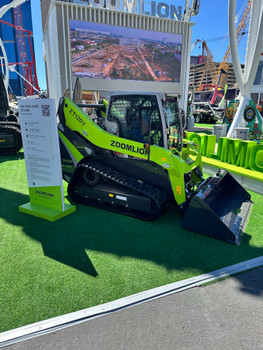
Mini Skid vs. Full-Size Skid Steer vs. Mini Excavator: Which One Actually Makes You More Money?
Posted by Nate Hagen on 18th Nov 2026
Mini Skid vs. Full-Size Skid Steer vs. Mini Excavator: Which One Actually Makes You More Money?
Bigger machines. More horsepower. Higher lift capacities. More technology.
It seems like every year, equipment manufacturers find another way to make their machines bigger and stronger.
And don't get me wrong, I love seeing what manufacturers come up with.
But here's a question worth asking:
Does a bigger machine actually make you more money?
Whether you're starting a landscaping company, expanding a construction business, or looking to add another machine to your fleet, choosing between a mini skid steer, full-size skid steer, and mini excavator isn't always as straightforward as it seems.
Each machine has advantages, limitations, and jobs where it really shines.
And here's something else I think gets overlooked: Choosing the right type of machine is only half the equation. Choosing one that's built for how you intend to use it is just as important.
Let's break down where these machines shine, where they struggle, and what actually matters when choosing equipment for your business.
1. Mini Skid Steers: Small for a Reason!
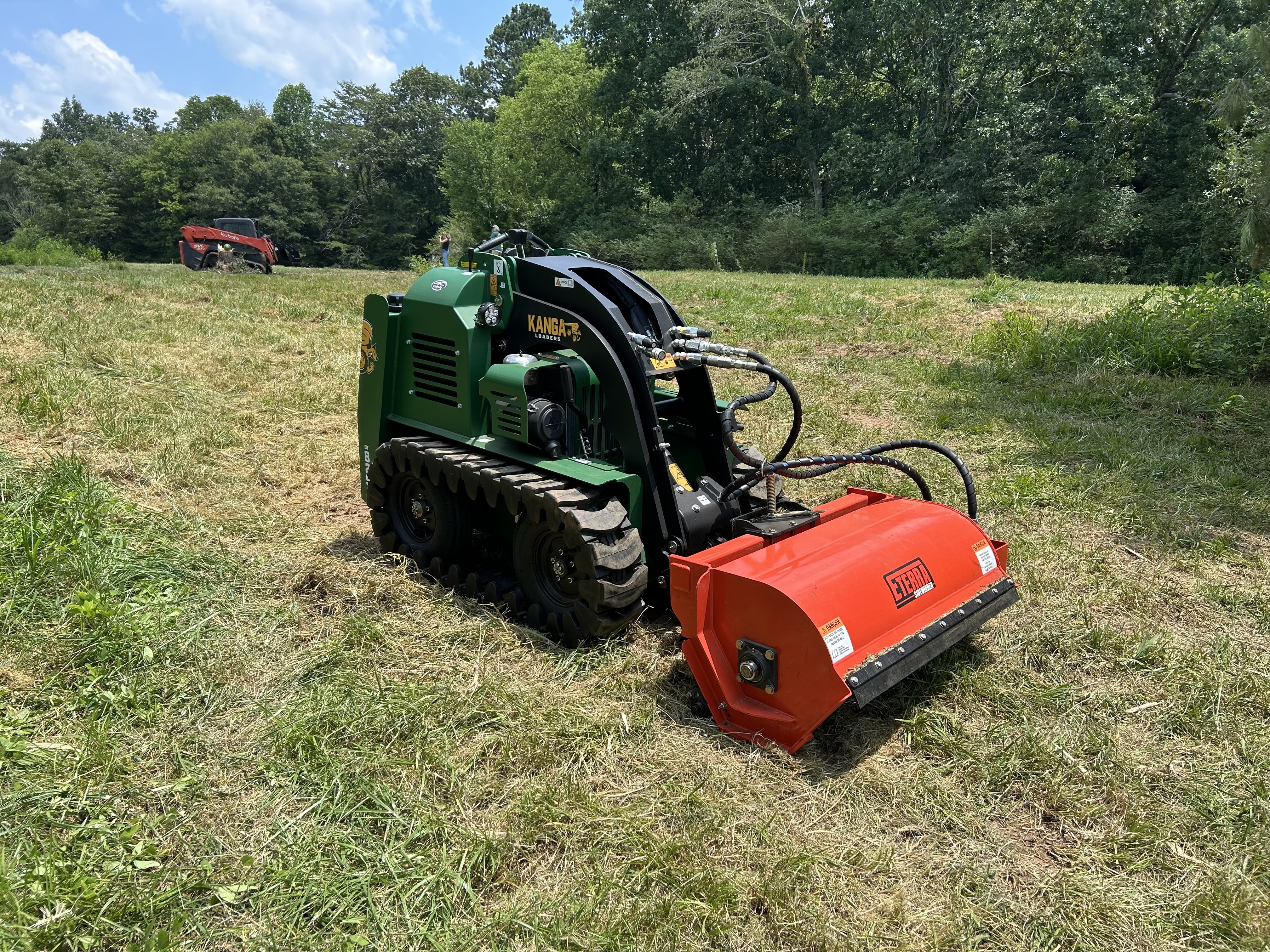
Let's start with the little guys.
Mini skid steers have become incredibly popular, and for good reason.
They're versatile, relatively easy to transport compared with many larger machines, and capable of running a wide range of attachments.
But here's where I have a strong opinion.
I think mini skid steers should actually stay mini.
It seems like every manufacturer is racing to build the biggest, strongest, highest-capacity mini skid on the market.
And while that's impressive, I think we're sometimes forgetting what made these machines so useful in the first place.
They can get into places other machines can't.
Take the smaller Kanga mini loaders, for example. Certain configurations of their 2 Series measure roughly 30–31 inches wide.
That's the type of machine that reminds me why the mini skid category exists.
Working in tight residential spaces, moving materials around landscaping projects, and handling jobs where a larger machine would simply be overkill.
Now, I'm not saying larger mini skids are bad machines. Quite the opposite. Some of the newer models have impressive lifting capacity and hydraulic capabilities.
But there's a trade-off between size and performance.
My point is simple: Bigger mini skids have their place, but let's not forget why the smaller ones are so valuable.
Where Mini Skids Really Shine
-
Residential landscaping and backyard renovations
-
Fence installation and post-hole drilling
-
Moving mulch, soil, gravel, and other materials
-
Stump grinding and property maintenance
-
Small trenching and irrigation projects
-
Hardscaping and landscape preparation
With the right attachments, a mini skid can handle a surprising variety of work.
Buckets, grapples, augers, trenchers, power rakes, and stump grinders can turn a compact machine into a valuable tool for a small contracting business.
Where Mini Skids Fall Short
Smaller machines have limitations, and ignoring them can get expensive.
Compared with full-size loaders, many minis have lower lift capacities, less hydraulic power, and smaller buckets.
That can mean more trips when moving large amounts of material and fewer options for running demanding hydraulic attachments.
Our take: For residential landscaping, property maintenance, and smaller projects, a mini skid can be incredibly productive.
But if you're moving truckloads of material across large jobsites every day, you might outgrow it pretty quickly.
2. Full-Size Skid Steers: The Multitools of the Equipment Industry
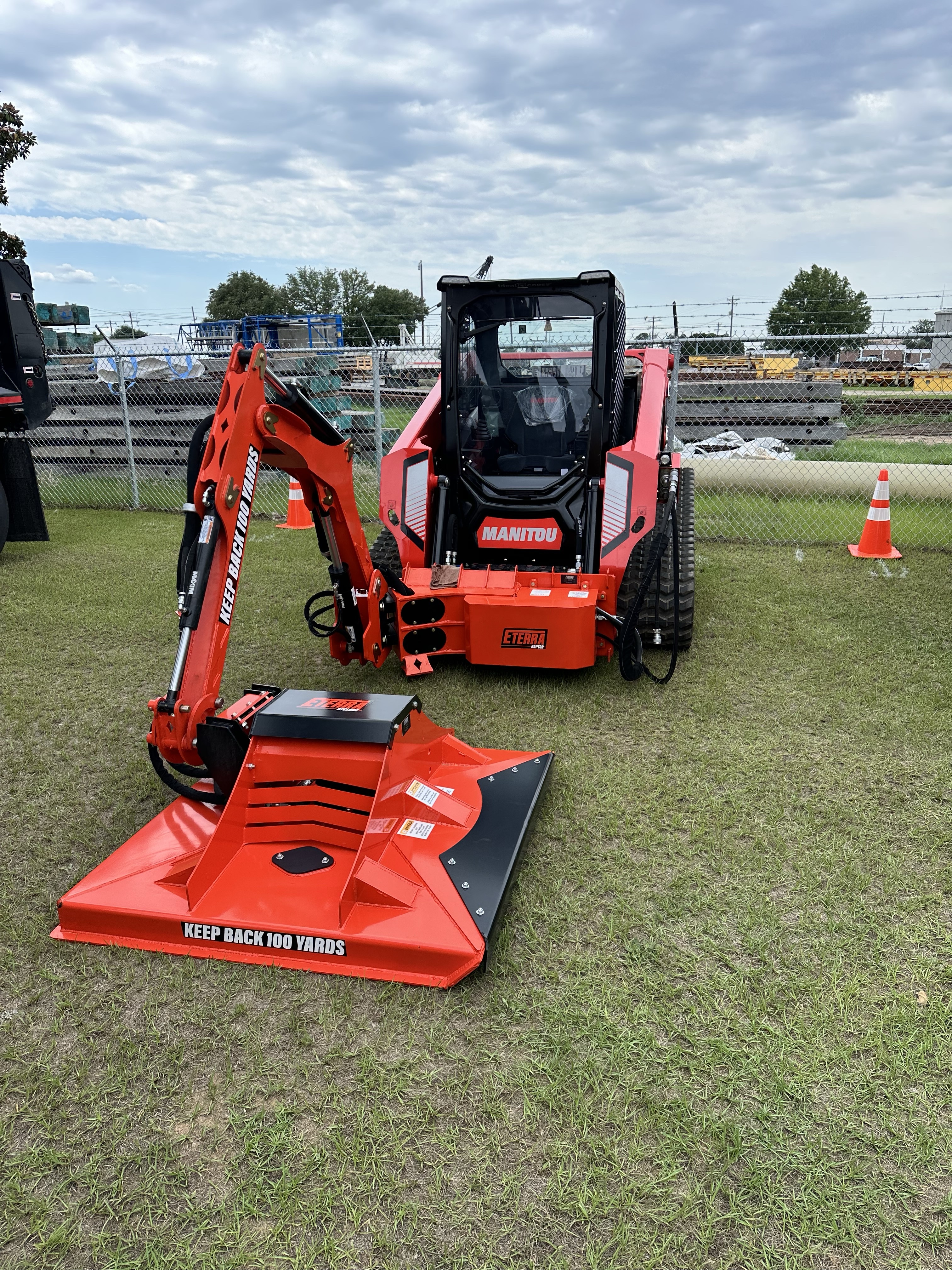
Now let's talk about full-size skid steers and compact track loaders.
I've always thought of these machines as the multitools of the equipment industry.
Seriously, think about everything they can do.
One day you're grading a property, the next you're clearing trees, cutting concrete, moving pallets, or running a specialized attachment most people have never even seen before.
It's pretty incredible how versatile they've become.
And this is where bigger can absolutely be better.
Where Full-Size Skid Steers Shine
-
Moving large volumes of dirt, gravel, and other materials
-
Heavy land clearing and brush management
-
Commercial construction and site preparation
-
Loading trucks and handling pallets
-
Running larger hydraulic attachments
-
Grading and preparing larger properties
If you're running a land-clearing business with a high-flow forestry mulcher, a full-size compact track loader may be exactly what you need.
The same goes for contractors operating equipment like cold planers, concrete grinders, heavy-duty mulchers, and other attachments requiring substantial hydraulic power.
But remember, not every full-size skid steer has the hydraulic capabilities required for every attachment. Matching the machine to the application still matters.
Where Full-Size Machines Fall Short
Size comes with trade-offs.
A larger skid steer generally needs more room to maneuver, and its operating weight can make transportation more complicated.
You also need to consider ground disturbance, overhead clearance, and whether the machine is simply too large for the work.
We've all seen those videos of someone raising their loader arms a little too close to a roofline. Not exactly the impression you want to leave on a jobsite!
But jokes aside, proper clearance and operating space are serious considerations.
And here's something else worth thinking about:
Just because a machine can do a job doesn't mean it's the most profitable machine to use.
If the equipment costs more to transport and operate than the job requires, that additional capability isn't necessarily making you money.
3. Mini Excavators: Sometimes You Need to Dig, Not Load
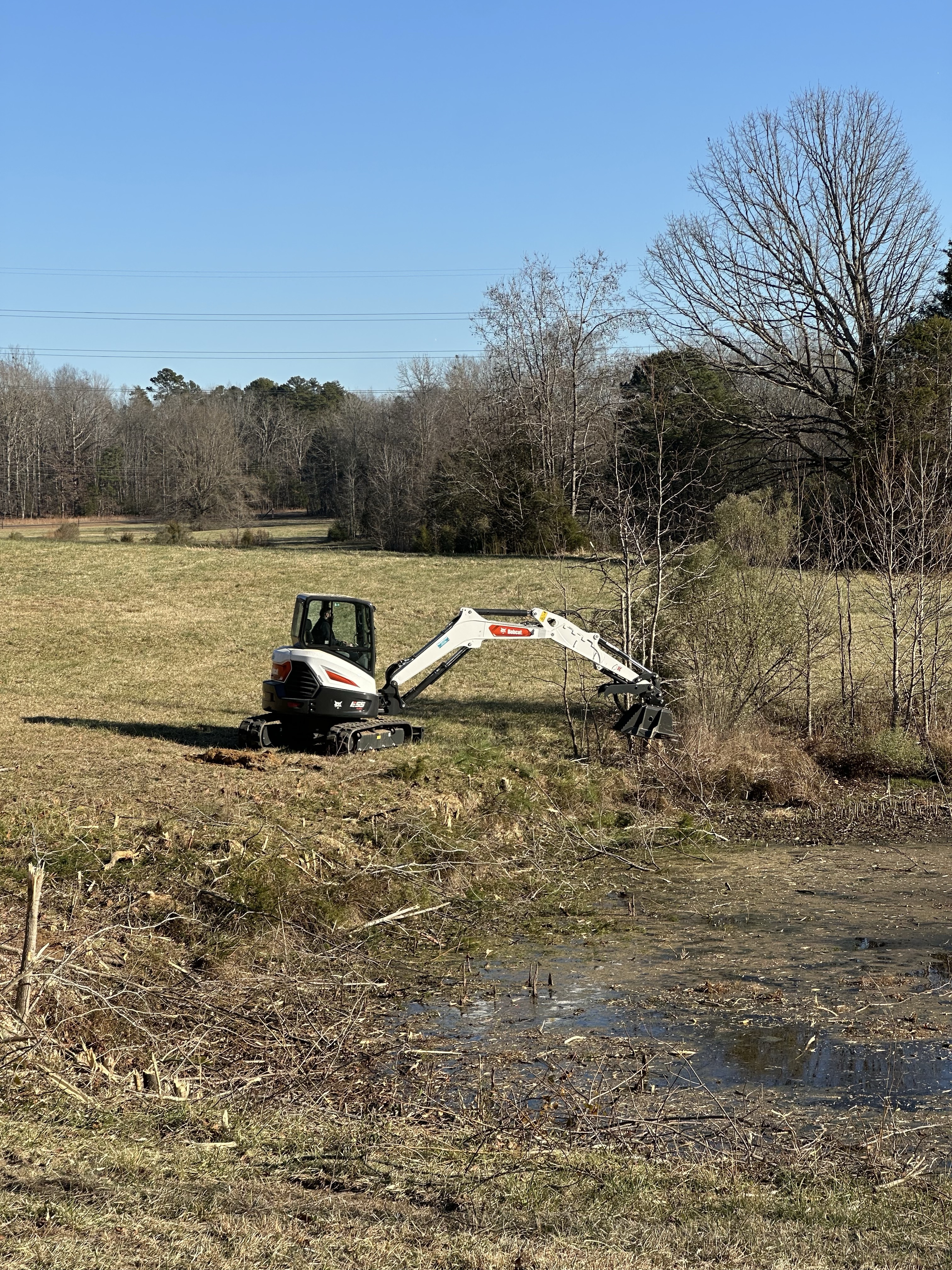
Now here's where the conversation changes.
A mini excavator isn't simply another version of a skid steer.
It's a different type of machine designed around a different primary purpose.
While skid steers are excellent at moving materials and carrying attachments, excavators excel at digging, reaching, and precisely positioning their work tools.
Where Mini Excavators Shine
-
Trenching for utilities and drainage
-
Digging footings and foundations
-
Excavating around obstacles
-
Working on uneven terrain within machine operating limits
-
Demolition and material removal
-
Precision digging near existing structures
The biggest advantage is the boom and stick.
Instead of repeatedly repositioning the entire machine to reach the work, an excavator can dig, lift, and position material using its hydraulic boom system.
And modern mini excavators can do a lot more than dig.
With compatible attachments, they can operate augers, hydraulic thumbs, brush cutters, grapples, breakers, and other specialized tools.
Where Mini Excavators Fall Short
If your primary job is moving piles of gravel, loading pallets, or transporting material repeatedly across a property, a skid steer is usually the more practical tool.
Excavators can move and place material, but they aren't designed to replace a loader for every material-handling task.
And while many mini excavators offer excellent access, their tail swing, working reach, transport weight, and required operating space still need consideration.
Our take: If most of your day involves digging, trenching, or working below ground level, a mini excavator deserves serious consideration.
If most of your day involves carrying, loading, and moving material, a loader will probably be the more productive choice.
4. Which Machine Wins on Real Jobs?
Let's put these machines into situations contractors actually encounter.
Job #1: Residential Landscape Renovation
You're replacing a lawn, moving several yards of material, installing landscape beds, and preparing a patio.
Our pick: A mini skid steer.
For a project like this, the combination of maneuverability, versatility, and available attachments makes a mini skid a great option.
You can move materials, prepare the ground, and handle multiple tasks without constantly switching equipment.
If the work involves substantial excavation or unusually large material volumes, though, another machine may be more efficient.
Job #2: Clearing Several Acres of Overgrown Property
You're tackling thick brush, small trees, and large areas of vegetation.
There's plenty of room to operate, and productivity is the priority.
Our pick: A properly equipped full-size skid steer or compact track loader.
With the right brush cutter or forestry mulcher, the additional power and attachment capacity can make a meaningful difference.
For this type of work, a mini skid may simply be undersized and underpowered.
Job #3: Installing Drainage Lines or Digging Footings
You're working on a property that requires trenches, precise digging, and excavation around obstacles.
Our pick: A mini excavator.
The digging depth, reach, and control make it a natural fit.
A mini skid with a trencher could still be useful for certain straight, narrow trenches, but an excavator offers more flexibility when excavation conditions become complicated.
Job #4: Installing a Long Fence Line
You're drilling post holes, moving materials, and working across multiple properties.
Our pick: It depends on the project.
For residential fencing, a mini skid with an appropriately sized auger can be an excellent setup.
For larger commercial fencing projects with heavy posts and open access, a full-size skid steer may make more sense.
And when difficult excavation or precise digging is the main challenge, an excavator might be the better choice.
Sometimes there isn't one perfect machine.
That's why understanding the work matters more than picking your favorite brand.
5. Don't Just Buy the Right Type of Machine. Buy the Right Quality.
Here's something I think deserves more attention in today's equipment market.
Open Facebook Marketplace or browse equipment listings online, and you'll see no shortage of inexpensive mini excavators, skid steers, and mini skids.
Some imported mini excavators are advertised at surprisingly low prices, sometimes around $5,000.
And I get the attraction!
If you're a homeowner wanting to dig a drainage ditch, install a few fence posts, or work on your property over the weekend, an inexpensive machine might be a reasonable option.
Not everybody needs a $50,000 machine to work around their house.
But there's a big difference between using equipment occasionally and depending on it to earn your living.
When Buying Cheap Might Make Sense
Let's say you're purchasing a small excavator for projects around your property.
You're not depending on it for daily income. You're comfortable doing some of your own maintenance. And if the machine needs a repair, you have some flexibility.
In that situation, a lower-priced machine might make financial sense, provided it's safe, suitable for the work, and support and replacement parts are available.
There's nothing wrong with buying equipment that fits your budget and your needs.
When Buying Cheap Can Get Expensive
Now imagine you're a contractor using that machine five or six days a week.
You've got customers scheduled, employees depending on you, and projects that need to be completed on time.
Then something breaks.
Can you get replacement parts?
Is there a dealer or service center that will work on the machine?
Can you find a hydraulic pump, final drive, electronic controller, or replacement seal without waiting weeks?
And if you need technical support, is there actually someone you can call?
A cheap machine isn't much of a bargain if you can't keep it running.
That's not to say every imported or budget machine is poorly built. Some manufacturers and importers offer legitimate warranties, stocked parts, and good service.
But others have very limited support.
And the same questions should be asked when buying a used machine from a major brand. A familiar logo doesn't guarantee the equipment has been properly maintained.
What I'd Look for Before Buying Any Machine
Beyond horsepower, lift capacity, and price, I'd want answers to these questions:
-
Is there a reliable source for parts?
-
Who handles warranty claims and repairs?
-
Are service manuals and maintenance information available?
-
How well is the machine built for the hours I plan to run it?
-
Can I find replacement tracks, hydraulic components, filters, and other common wear parts?
-
Will it operate the attachments I actually need?
-
What will the machine be worth if I decide to sell it?
And if you're buying a new imported machine, verify that it meets applicable U.S. safety and emissions requirements.
Here's another thought: Sometimes a well-maintained used machine from an established manufacturer is worth considering instead of buying the cheapest new machine available.
Our advice: Buy for the workload, not just the purchase price.
If you're doing occasional projects, a budget machine may serve you well.
If you're relying on it week in and week out to support your business, durability, serviceability, and parts availability become much more important.
6. Which Machine Actually Makes You More Money?
Here's where I think equipment owners should spend more time thinking.
It's easy to look at horsepower, lift capacity, digging depth, or hydraulic flow.
But those numbers don't tell you how profitable your business will be.
A contractor's profit depends on several things:
-
How much they can charge for the work
-
How quickly they can complete it
-
Equipment payments, rental costs, and depreciation
-
Transportation and fuel expenses
-
Labor requirements
-
Maintenance and unexpected downtime
-
How often the machine actually gets used
A machine that sits around waiting for the perfect job isn't necessarily a good investment.
And neither is a machine that can't keep up with your typical workload.
Here's How We'd Think About It
If you operate a residential landscaping business and most of your projects involve smaller properties, a compact mini skid may give you the best return.
If you're running a commercial site-preparation or land-clearing business, a larger skid steer may help you accomplish more work per hour.
If you're an excavation contractor spending most of your day digging trenches, installing utilities, and preparing foundations, a mini excavator could be your most valuable machine.
But equipment reliability also plays a role.
Saving thousands on the purchase price doesn't help much if unexpected downtime starts costing you jobs.
The most profitable machine isn't always the biggest, newest, or cheapest. It's the one that completes your typical jobs efficiently, reliably, and at a cost that makes sense.
And sometimes the smartest financial decision isn't purchasing another machine at all.
It might be investing in an attachment that allows you to offer another service with equipment you already own.
7. The Right Attachment Can Be Just as Important as the Machine
This is something we talk about all the time at Skid Steer Solutions.
Your machine is only part of the equation.
The attachments you choose can completely change what that machine is capable of accomplishing.
And sometimes, choosing the right attachment can create an entirely new opportunity for your business.
Getting More Out of a Mini Skid
Let's say you operate a small landscaping company.
You've already got a mini skid that you use for moving material, grading yards, and general property maintenance.
But what if you could use that same machine for additional services?
An auger could help you take on fence installation projects.
A power rake could improve your efficiency on lawn renovation and soil preparation jobs.
A grapple could help with brush cleanup and material handling.
A stump grinder could open the door to stump-removal work.
Of course, each attachment needs to be properly matched to your machine, and not every mini skid can operate every attachment.
But that's the exciting part of compact equipment.
You don't necessarily need another machine to expand what your business can offer.
Getting More Out of a Full-Size Skid Steer
Now let's look at a contractor operating a full-size skid steer or compact track loader.
Maybe you've been using it primarily for moving dirt, loading trucks, and grading jobsites.
There's nothing wrong with that.
But think about the possibilities.
A forestry mulcher or heavy-duty brush cutter could help you take on land-clearing projects.
A cold planer or concrete grinder could introduce new surface-preparation services, provided your machine has the required hydraulic capabilities.
A vibratory roller could support certain compaction projects.
A specialized grading attachment could help improve productivity and precision on appropriate site-preparation jobs.
The list goes on.
That's why I like calling skid steers the multitools of the equipment industry.
The machine provides the platform, but the attachments are what make it so versatile.
Getting More Out of a Mini Excavator
Mini excavators might be some of the most overlooked machines when it comes to attachment versatility.
Most people think about digging buckets, and for good reason.
But what about everything else?
A hydraulic thumb can make handling logs, rocks, and demolition debris easier.
An auger can add post-hole drilling capabilities.
A compatible brush cutter can help with vegetation maintenance in areas that are difficult to reach with a loader.
Hydraulic breakers can expand demolition capabilities.
And specialized grading attachments can make certain finishing and site-preparation tasks easier.
The boom and stick offer a different type of versatility than a skid steer, especially when reach and positioning are important.
Here's the Part That Really Matters: Finding the Right Attachment
Having hundreds of attachment options is great.
But figuring out which one is actually right for your machine and your job can be confusing.
A customer might know they need to clear brush but have no idea whether they should be looking at a rotary cutter, flail mower, disc mulcher, or drum mulcher.
Or maybe they're trying to drill fence posts and aren't sure what auger drive or bit makes sense for their soil conditions.
That's where we want Skid Steer Solutions to be different.
We don't want to just sell you an attachment. We want to help you find the right solution for the work you're trying to accomplish.
When someone reaches out, here's what we'd want to understand:
What machine are you operating?
Make, model, hydraulic capabilities, and operating capacity all matter.
What are you trying to accomplish?
Clearing heavy brush is different from mowing tall grass. Digging post holes in soft soil is different from drilling in rocky ground.
How often will you use the attachment?
Something used a few weekends a year may call for a different investment than equipment running five days a week.
What kind of results are you expecting?
Do you need a clean finish, maximum production, precision, or something that can handle demanding conditions?
And what makes sense for your budget?
Sometimes the more expensive attachment is worth every penny. Other times, a simpler product will accomplish the job just as well.
We'd rather help you understand the difference before you spend the money.
Compatibility Matters More Than You Might Think
Before purchasing an attachment, make sure you've verified:
-
Mounting interface and coupler compatibility
-
Machine lift capacity, stability, and attachment weight
-
Required hydraulic flow (GPM) and pressure (PSI)
-
Electrical controls and connector requirements
-
Case drain or additional hydraulic plumbing
-
Attachment dimensions and operating clearance
-
Availability of replacement parts and service support
Even when two machines look similar, their capabilities may be very different.
A high-flow forestry mulcher designed for a larger compact track loader isn't necessarily going to work on a smaller standard-flow machine.
And an excavator attachment needs to match more than just the machine's weight class. Pin dimensions, coupler design, hydraulic requirements, and working capacity matter too.
At SSS, you can explore our:
Or reach out to our team and tell us what you're running and what you're trying to accomplish.
Sometimes the best attachment isn't the one you originally had in mind. And that's exactly why having a conversation can be so valuable.
8. Five Questions to Ask Before Buying Your Next Machine
Before making a major equipment investment, we'd encourage every contractor to answer five questions.
1. What jobs do I perform most often?
Don't choose a machine based on the occasional big job. Start with the work that actually pays your bills.
2. What size and type of machine do those jobs require?
Think about access, lifting capacity, digging depth, hydraulic power, and the space you need to operate safely.
3. How much will I actually use this machine?
Occasional personal projects and daily commercial work place very different demands on equipment.
4. What will ownership and maintenance cost?
Consider purchase price, financing, transportation, fuel, service, parts availability, and potential downtime.
5. Could another attachment solve the problem?
Sometimes an attachment can open up new opportunities without adding another machine to your fleet.
Frequently Asked Questions
Is a mini skid steer better than a full-size skid steer?
Neither is universally better. Mini skids often excel at smaller jobs and restricted-access work, while full-size skid steers generally offer more capacity and hydraulic power for demanding applications.
Are inexpensive imported mini excavators worth buying?
They can be, depending on your application and the individual machine. For occasional projects, a lower-cost machine may be reasonable. For regular commercial use, parts availability, service support, durability, and reliability deserve particularly close attention.
Is a mini excavator better than a skid steer for landscaping?
It depends on the project. Mini excavators excel at digging and trenching, while skid steers are typically better suited to moving and loading material. Many landscaping contractors benefit from having access to both.
Can attachments help me make more money without buying another machine?
Potentially. The right attachments can allow contractors to offer additional services, improve productivity, and take on different types of work. Profitability depends on customer demand, equipment compatibility, operating costs, and how frequently those attachments are used.
Should I buy another machine or invest in more attachments?
Start by looking at the work you're turning down. If your existing machine can safely and efficiently perform that work with a compatible attachment, upgrading your attachment lineup may make sense. If you're consistently limited by machine capacity, reach, or productivity, another machine might be the better investment.
Final Thoughts: The Right Equipment for the Right Job
I'm all for innovation.
I love seeing manufacturers push equipment capabilities, develop new attachments, and find ways to make machines more productive.
But I also think it's important to remember that bigger, newer, and more expensive don't automatically mean better.
A mini skid that's perfect for residential landscaping might be completely wrong for a large land-clearing project.
A full-size skid steer might be incredibly productive on one jobsite and unnecessary on another.
And an inexpensive excavator might be a great tool for someone working around their property, but the wrong investment for a contractor who depends on that machine every day.
The real goal isn't to own the biggest machine or the most expensive attachment. It's to have equipment that works for you.
And once you've chosen the right machine, don't overlook what the right attachments can do for your operation.
At Skid Steer Solutions, we're here to help you get more out of the equipment you own.
Whether you're running a mini skid, full-size skid steer, or excavator, we'll help you explore attachments that make sense for your machine, your workload, and your budget.
Visit Skid Steer Solutions or give us a call at 866-966-2538.
Now we'd love to hear from you:
With so many new equipment brands entering the market, do you think the low-cost machines are changing the industry for the better? Or would you rather spend more for established parts and service support?
And are mini skid steers getting too big, or are manufacturers moving in the right direction?
More Than Attachments. Real Solutions.